1. Introduction: The Google Maps Ranking Opportunity
Your Google Maps ranking could be the difference between a customer choosing you — or your competitor down the street. When someone searches for a restaurant, salon, plumber, or shop near them, Google Maps delivers the top three results in what is commonly called the ‘Local Pack.’ Appearing there drives real foot traffic, real phone calls, and real revenue.
Most small business owners know they need a Google Business Profile (GBP). But far fewer realize that a professionally built website is one of the strongest signals Google uses to determine your local search ranking. At MarkMyBiz, we have helped dozens of businesses across Dehradun and Uttarakhand climb the local rankings by combining smart website development with Google Maps optimization.
Key insight: Google does not rank your Google Business Profile in isolation. It evaluates the entire digital ecosystem around your business — and your website is a critical part of that ecosystem.
2. What Is Google Maps Ranking and Why Does It Matter?
Defining Google Maps Ranking
Google Maps ranking refers to the position your business occupies when users search for products or services locally. When a user types ‘best cafe near me’ or ‘plumber in Dehradun,’ Google evaluates hundreds of signals to decide which three businesses appear in the Local Pack — the prominent map-and-listing block at the top of search results.
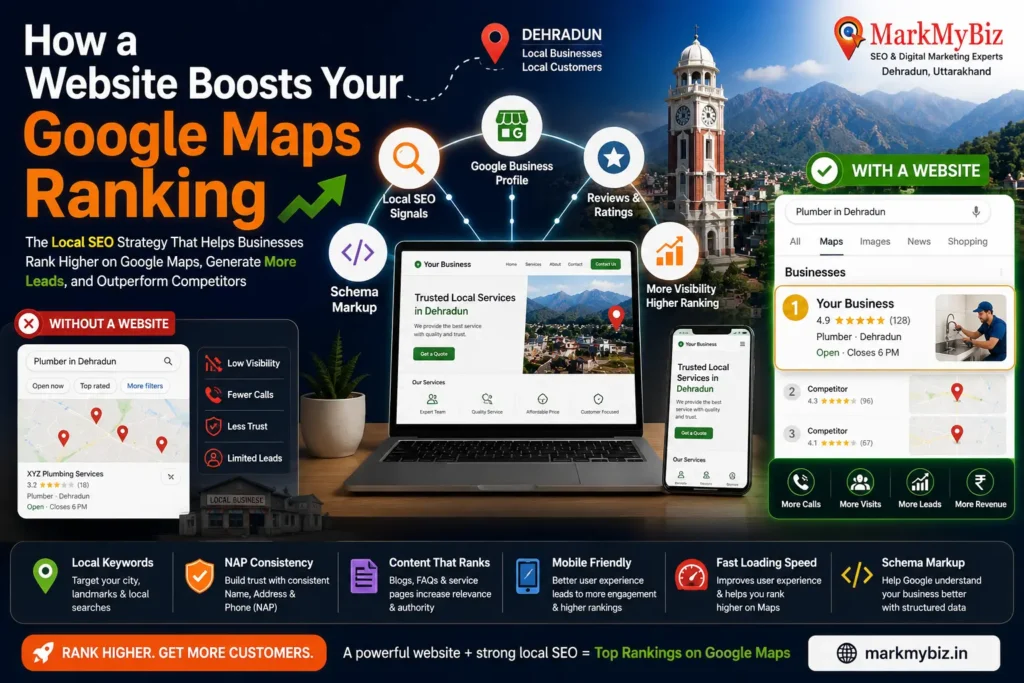
| Quick Answer (AI Overview Optimized) Google Maps ranking is determined by three core factors: Relevance (how well your profile matches the search query), Distance (how close you are to the searcher), and Prominence (how well-known and authoritative Google considers your business to be). A professional website directly improves your Prominence score. |
Why Local Pack Rankings Drive Business Growth
Studies consistently show that the top three Local Pack results capture the majority of local search clicks. Businesses in position one receive dramatically more calls and website visits than those in position four or lower. For small businesses in Dehradun competing for local customers, a strong Google Maps ranking is not a luxury — it is a necessity.
- 46% of all Google searches have local intent (source: Google)
- 76% of people who search for something nearby visit a business within a day
- Local Pack listings generate up to 5x more clicks than organic results for local queries
- Businesses with complete profiles are 70% more likely to attract location visits
3. The Hidden Link: How Your Website Affects Google Maps Ranking
Many business owners treat their website and their Google Business Profile as two separate marketing tools. In reality, Google evaluates them as part of a single, interconnected local presence. Here is how your website directly influences your Google Maps ranking:
3.1 Domain Authority and Prominence
Google’s concept of Prominence — one of the three core ranking factors for Maps — is heavily influenced by your website’s authority. A website with quality backlinks, consistent content, and strong technical SEO signals to Google that your business is a legitimate, established entity in your industry and location.
3.2 Location Pages and Geographic Signals
A well-structured website with a dedicated location page (including your business address, service area, embedded Google Map, and locally relevant content) sends powerful geographic signals to Google’s algorithm. This helps Google confidently associate your business with searches in Dehradun and surrounding areas.
3.3 Structured Data and Schema Markup
Implementing LocalBusiness schema markup on your website gives Google machine-readable information about your business: name, address, phone number, hours, services, and more. This directly supports your Google Business Profile and improves your chances of appearing in AI-generated search answers, featured snippets, and the Local Pack.
3.4 Website Speed and Mobile Experience
Google prioritizes businesses that provide excellent user experiences. A fast-loading, mobile-responsive website reduces bounce rates and increases engagement time — both of which are behavioral signals Google may use in ranking decisions. For local businesses in Dehradun where mobile search dominates, this is critical.
3.5 The NAP Signal Chain
Your website reinforces your Name, Address, and Phone Number (NAP) consistency across the web. When your website, Google Business Profile, and directory listings all display identical NAP information, Google’s trust in your business data increases — directly supporting your Maps ranking.
4. NAP Consistency: The Foundation of Local SEO
NAP consistency is one of the most fundamental yet most overlooked aspects of local SEO for Google Maps. Every time Google’s crawlers find your business information online, they cross-reference it against what is on your Google Business Profile.
| What Is NAP Consistency? NAP stands for Name, Address, and Phone Number. NAP consistency means that these three pieces of business information are identical — character for character — across your website, Google Business Profile, social media profiles, online directories, and any other digital mention of your business. |
Common NAP Mistakes That Hurt Your Ranking
- Using ‘Rd.’ on your website but ‘Road’ on your GBP
- Different phone number formats (+91-XXXXXXXXXX vs 0XXXXXXXXXX)
- Old address still appearing on third-party directories after relocation
- Business name variations (‘MarkMyBiz’ vs ‘Mark My Biz’ vs ‘MarkMyBiz Digital’)
At MarkMyBiz, we conduct a full NAP audit as part of every local SEO engagement, ensuring your business data is consistent across all platforms. This single activity often produces measurable improvements in Google Maps ranking within 30 to 60 days.
5. Website Signals That Directly Impact Your Google Maps Position
5.1 On-Page Local SEO Signals
Your website’s on-page content should clearly communicate where you are and what you do. This means integrating location keywords naturally throughout your content — in page titles, meta descriptions, H1 and H2 headings, body copy, image alt text, and footer text.
| Website Signal | Impact on Google Maps Ranking | Priority |
| LocalBusiness Schema Markup | Directly feeds structured data to Google | Critical |
| Location-Specific Landing Page | Boosts geographic relevance | High |
| Embedded Google Map | Confirms physical location to Google | High |
| NAP in Footer (All Pages) | Reinforces consistency signals | High |
| Mobile Responsiveness | Improves user experience signals | High |
| Page Load Speed (Core Web Vitals) | Reduces bounce rate; improves UX signals | Medium-High |
| Local Content & Blog Posts | Builds topical authority for local terms | Medium |
| Internal Linking to Location Page | Passes authority to local content | Medium |
| SSL Certificate (HTTPS) | Trust signal for Google | Essential |
| Geo-Tagged Images | Reinforces location signals in media | Low-Medium |
5.2 Technical SEO for Local Rankings
Technical SEO forms the backbone of any effective local search strategy. Even the best content will not rank if Google cannot properly crawl, index, and understand your website. Key technical elements include:
- XML Sitemap: Helps Google discover all your pages, including location-specific ones
- Robots.txt: Ensures Google is not blocked from indexing critical local pages
- Canonical Tags: Prevents duplicate content issues that confuse Google’s understanding of your site
- Core Web Vitals: Google’s page experience signals directly influence rankings
- Structured Data Testing: Validate your LocalBusiness schema regularly
6. Google Business Profile Optimization: The Website Connection
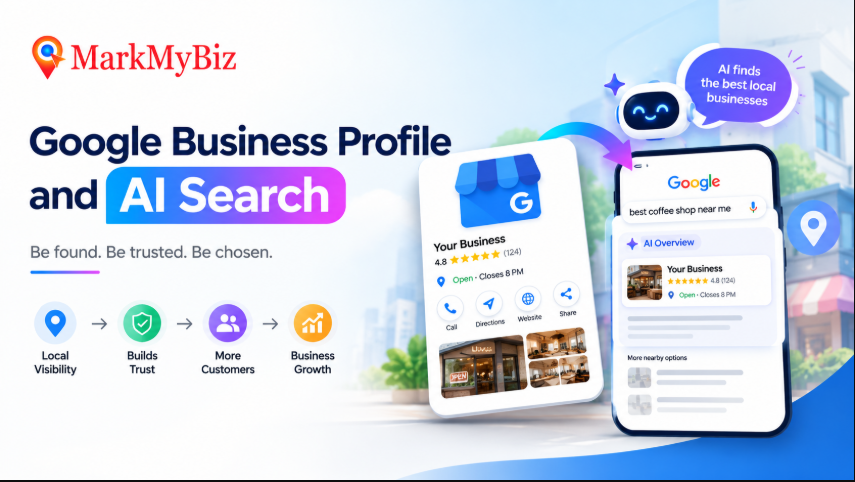
Your Google Business Profile (GBP) is the front door of your local online presence, but your website is the house it opens into. The two must work together to maximize your Google Maps ranking.
How to Connect Your Website and GBP Effectively
- Link your verified website URL in your GBP — use your exact homepage or a dedicated location landing page
- Ensure your GBP business name, address, and phone number exactly match your website footer
- Use GBP posts to link back to relevant blog posts or service pages on your website
- Add UTM parameters to your GBP website link to track traffic in Google Analytics
- Upload professional photos that match the brand imagery on your website
- Use your website’s keyword strategy to inform your GBP description and service categories
Expert tip from MarkMyBiz: Businesses that actively publish weekly Google Business Profile posts while simultaneously updating website content see 30-40% faster improvement in local rankings compared to those who optimize only their GBP.
Categories, Attributes, and Services
Your primary and secondary GBP categories should mirror the service pages on your website. If your website has a dedicated page for ‘Website Design for Local Businesses in Dehradun,’ your GBP should include ‘Web Designer’ as a relevant category. This alignment reinforces your relevance signals across both platforms.
7. Local SEO for Google Maps: A Step-by-Step Strategy
Achieving a strong Google Maps ranking requires a systematic approach. Here is the proven framework used by MarkMyBiz for small businesses in Dehradun and across Uttarakhand:
Step 1: Audit Your Current Local Presence
- Run a NAP consistency check across all directories
- Analyse your website’s current local keyword rankings
- Review your GBP for completeness and accuracy
- Check your review count and average rating vs. competitors
Step 2: Build or Optimize Your Local SEO Website
- Create dedicated location pages for each service area
- Implement LocalBusiness schema markup on all relevant pages
- Add an interactive Google Map embed on your Contact page
- Ensure NAP is in the footer of every page
- Optimize page speed to meet Core Web Vitals thresholds
Step 3: Optimise Your Google Business Profile
- Complete every section of your GBP — categories, services, hours, photos
- Link to your optimized website
- Enable messaging and Q&A features
- Post at least once per week with relevant updates
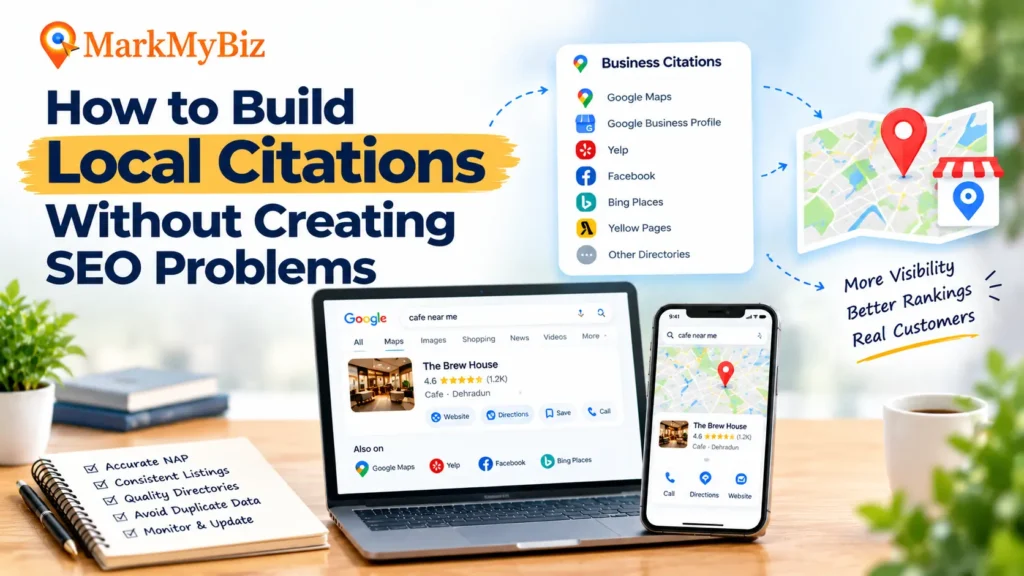
Step 4: Build Local Citations
- List your business on Justdial, Sulekha, IndiaMart, and other Indian directories
- Submit to industry-specific directories relevant to your niche
- Ensure NAP is identical across all submissions
Step 5: Generate and Manage Reviews
- Actively request reviews from satisfied customers
- Respond professionally to every review — positive and negative
- Embed Google reviews on your website using a review widget
Step 6: Publish Local Content Consistently
- Write blog posts targeting local search queries (e.g., ‘best digital marketing services in Dehradun’)
- Create case studies featuring local clients and projects
- Publish local guides and resources that attract backlinks
Step 7: Build Local Backlinks
- Partner with local news sites, business associations, and community organisations
- Get featured in local business directories and chamber of commerce listings
- Sponsor local events to earn mentions and links from local websites
Step 8: Monitor, Measure, and Iterate
- Track your Google Maps ranking using tools like BrightLocal or Whitespark
- Monitor GBP insights: searches, views, clicks, and calls
- Analyse website traffic from local searches in Google Analytics 4
- Refine your strategy based on monthly performance data
8. Website Design for Local Businesses: Why It Matters
Not all websites are created equal when it comes to local SEO. A generic template website may look attractive but fail to deliver the structural and technical signals needed to support your Google Maps ranking. This is why local business website development requires a specialist approach.
What Makes a Website Local SEO-Friendly?
| Feature | Generic Website | SEO-Friendly Local Website |
| LocalBusiness Schema | Absent | Fully implemented |
| Location Landing Pages | Single homepage | Dedicated pages per area |
| NAP Placement | Contact page only | Footer on every page |
| Mobile Optimisation | Basic responsive | Mobile-first, Core Web Vitals compliant |
| Page Speed | Average (3-5s) | Optimised (<2s load time) |
| GBP Integration | None | Linked and aligned |
| Local Content Strategy | None | Blog, case studies, local guides |
| Review Integration | None | Embedded Google reviews widget |
| Structured Data | None | Schema markup for all key entities |
| Internal Linking | Random | Strategic, location-focused |
SEO-Friendly Website Development in Dehradun
MarkMyBiz specialises in SEO-friendly website development in Dehradun. Every website we build is architected from the ground up to support strong local search performance. We integrate LocalBusiness schema markup, location-optimised content, mobile-first design, and Core Web Vitals compliance as standard features — not afterthoughts.
Whether you need a new website for your local business or a comprehensive rebuild of an existing site, our team understands the specific competitive landscape of Dehradun’s local search market. We know which keywords matter, which directories carry the most weight, and how to structure your online presence to outperform local competitors.
9. MarkMyBiz: Your Google Maps Ranking Partner in Dehradun
MarkMyBiz is a dedicated local SEO and digital marketing agency based in Dehradun, Uttarakhand. We specialise in helping small and medium-sized businesses achieve dominant Google Maps rankings through a combination of professional website development, Google Business Profile optimisation, and comprehensive local SEO strategy.
Our Google Maps Ranking Services in Dehradun Include:
- Full local SEO audit and strategy development
- SEO-friendly website development and redesign
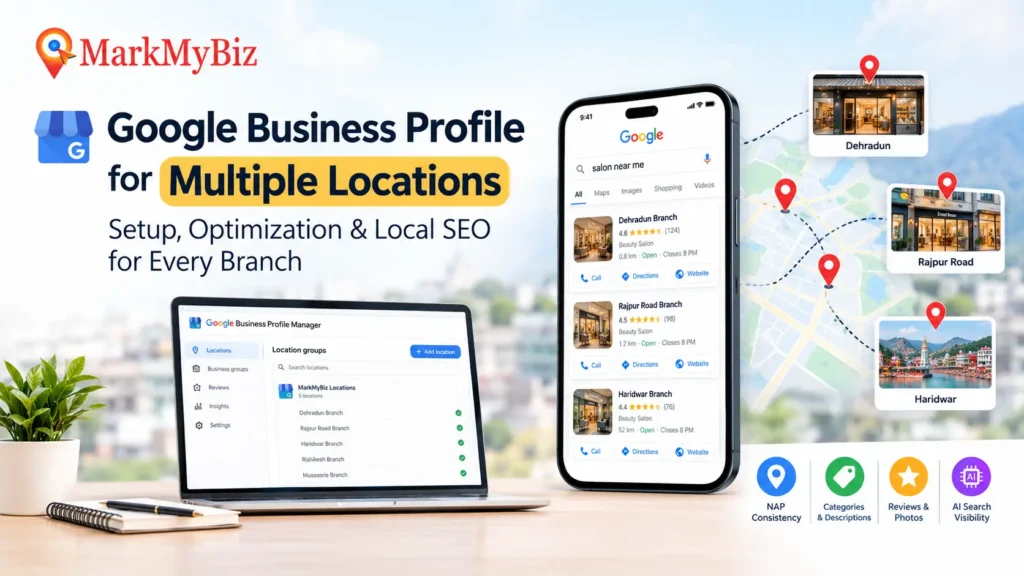
- Google Business Profile setup, verification, and optimisation
- NAP consistency audit and citation building
- LocalBusiness schema markup implementation
- Local content strategy and blog management
- Review generation and reputation management
- Monthly Google Maps ranking tracking and reporting
Why choose MarkMyBiz? We are not a generic digital agency offering cookie-cutter solutions. We are local SEO specialists who understand the Dehradun market, the competition your business faces, and the exact strategies that produce measurable ranking improvements.
Our clients range from independent restaurants and retail shops to professional service providers, healthcare practitioners, and hospitality businesses across Dehradun and the broader Uttarakhand region. Visit us at markmybiz.in to explore our services and case studies.
10. Comparison Table: Website vs. No Website on Google Maps
| Ranking Factor | Business WITH Website | Business WITHOUT Website |
| Prominence Score | High — website authority supports GBP | Low — limited digital footprint |
| NAP Consistency | Reinforced across web and GBP | Harder to control and verify |
| Structured Data | LocalBusiness schema boosts relevance | No machine-readable data |
| Local Content Signals | Blog posts and pages build topical authority | No content signals |
| Backlink Profile | Can attract quality local backlinks | Very limited backlink potential |
| User Experience Signals | Website visits, time-on-site improve signals | No behavioural data |
| Review Integration | Reviews embed on website, increasing trust | Reviews isolated on GBP only |
| Conversion Potential | Visitors convert via contact forms, calls, bookings | Limited to GBP actions only |
| AI Overview Presence | Structured content eligible for AI-generated answers | Minimal eligibility |
| Long-Term Ranking Stability | Strong and sustainable | Fragile and limited |
11. Key Takeaways
| Summary: How a Website Helps Your Google Maps Ranking 1. Your website is a core Prominence signal for Google Maps ranking. 2. NAP consistency between your website and GBP is foundational. 3. LocalBusiness schema markup provides structured data that directly supports local rankings. 4. Location-specific pages and local content build geographic relevance and topical authority. 5. Mobile-first design and Core Web Vitals compliance improve user experience signals. 6. Aligning your website’s keyword strategy with your GBP creates compounding local SEO effects. 7. Businesses with professional, SEO-friendly websites consistently outrank those without in Local Pack results. 8. MarkMyBiz offers specialised Google Maps ranking services and local business website development in Dehradun. |
Ready to Rank Higher on Google Maps?
If your business is not appearing in the top three results on Google Maps, you are losing customers to your competitors every single day. A professionally developed, SEO-optimised website combined with a fully optimised Google Business Profile is the most effective way to change that.
MarkMyBiz provides expert Google Maps ranking services, SEO-friendly website development, and complete local SEO solutions for small businesses in Dehradun and across Uttarakhand. Our team is ready to audit your current local presence, identify the gaps, and execute a strategy that delivers measurable ranking improvements.
12. Frequently Asked Questions (FAQs)
Q1. Does having a website really improve my Google Maps ranking?
Yes. Google uses your website as a major Prominence signal. A professional, SEO-optimised website with LocalBusiness schema markup, location-specific content, and consistent NAP data directly improves your position in local search results and the Google Maps Local Pack.
Q2. What is the most important website element for Google Maps SEO?
NAP consistency is foundational, but LocalBusiness schema markup has the most direct technical impact. It gives Google structured, machine-readable data about your business entity, which feeds directly into how Google understands and ranks your business for local queries.
Q3. How long does it take for a website to improve my Google Maps ranking?
Most businesses see measurable improvement within 60 to 90 days after implementing a comprehensive local SEO strategy that includes website optimisation. Factors like competition intensity, current domain authority, and review volume affect the timeline.
Q4. Can I rank on Google Maps without a website?
Yes, it is technically possible — but highly difficult in competitive markets. Without a website, you lack the Prominence signals, structured data, and local content that help Google understand and trust your business. Competitors with professional websites will consistently outrank you.
Q5. What is Google Business Profile optimisation and why does it matter?
Google Business Profile (GBP) optimisation involves completing and maintaining your free Google listing with accurate business information, photos, posts, and reviews. A fully optimised GBP, when paired with a professional website, is the most effective way to achieve and maintain strong Google Maps rankings.
Q6. How does MarkMyBiz help with Google Maps ranking?
MarkMyBiz offers comprehensive Google Maps ranking services in Dehradun including local SEO audits, GBP optimisation, SEO-friendly website development, NAP consistency management, local citation building, and monthly performance tracking. Visit markmybiz.in for details.
Q7. What is local SEO for Google Maps?
Local SEO for Google Maps is the practice of optimising your online presence — including your website, Google Business Profile, local citations, and reviews — to rank higher in Google Maps and local search results for geographically relevant queries.
Q8. How important are reviews for Google Maps ranking?
Reviews are a significant ranking signal. Google considers the quantity, quality, recency, and diversity of reviews. Businesses with a higher volume of positive, recent reviews consistently rank better in the Local Pack. Responding to reviews also signals active business management to Google.
Q9. What is LocalBusiness schema markup?
LocalBusiness schema markup is a type of structured data code added to your website that gives search engines machine-readable information about your business — name, address, phone, hours, geo-coordinates, and services. It is one of the most impactful technical SEO implementations for local businesses.
Q10. How do I get started with local business website development in Dehradun?
Contact MarkMyBiz at markmybiz.in to begin with a free local SEO audit. Our team will evaluate your current website and Google Business Profile, identify ranking opportunities, and develop a tailored strategy to improve your Google Maps position in the Dehradun market
Recommended External Authority Sources
| Source | URL / Reference | Use For |
| Google Business Help | support.google.com/business | GBP official documentation |
| Google Search Central | developers.google.com/search | Schema markup guidelines |
| Schema.org LocalBusiness | schema.org/LocalBusiness | Structured data reference |
| Moz Local SEO Guide | moz.com/learn/seo/local | Local SEO best practices |
| BrightLocal Research | brightlocal.com/research | Local search statistics |
| Google Search Quality Guidelines | google.com/search/howsearchworks | EEaT and quality signals |
| Search Engine Land | searchengineland.com | Industry news and studies |
| Whitespark Local Citation Finder | whitespark.ca | Citation building tool reference |
| Think with Google | thinkwithgoogle.com | Consumer behaviour data |
| PageSpeed Insights | pagespeed.web.dev | Core Web Vitals measurement |