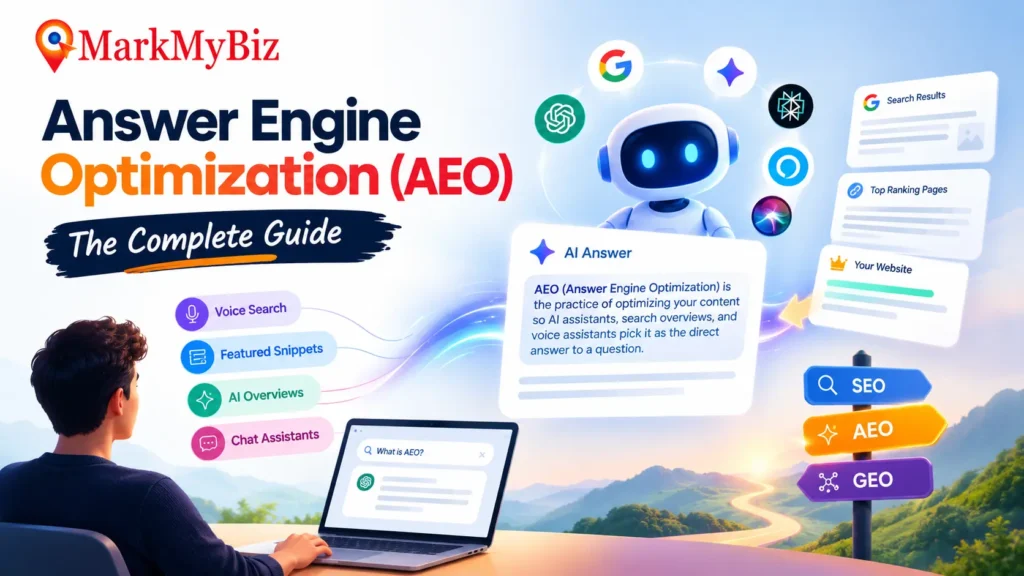
Ask Siri a question on your drive to work. Ask ChatGPT the same question an hour later, at your desk. Then type it into Google and watch an AI Overview answer it before you even reach the first blue link.
Three different tools, one shared habit: none of them wanted you to open ten tabs and read through them. They wanted to hand you an answer and be done with it.
Getting your content chosen as that answer — instead of just being one of the ten links nobody clicks — is what Answer Engine Optimization is about. Most business owners haven’t heard the term yet. Their customers are already living inside it.
Quick Answer: What Is Answer Engine Optimization?
Answer Engine Optimization (AEO) is the practice of writing and structuring content so AI assistants, Google AI Overviews, featured snippets, and voice assistants pick it as the direct answer to a question, instead of listing it as one link among many. It builds on ordinary SEO rather than replacing it — you still need authority and relevance to be in the running at all. AEO adds one more requirement on top of that: the answer has to be easy for a machine to find, lift out, and quote, usually by answering the question in the first two sentences of a section and backing it with clean structured data.
What Is Answer Engine Optimization (AEO)?
An answer engine is any system that takes a question and hands back one answer, rather than a list of places to go looking. Google’s featured snippets and AI Overviews fit that description. So do ChatGPT, Gemini, Perplexity, Microsoft Copilot, Siri, and Alexa.
AEO is the work of making your content the thing those systems reach for. That mostly comes down to four habits: opening sections with a clear, self-contained answer; phrasing headings the way people actually ask the question, out loud or in a search bar; marking up the page with structured data so its format is explicit rather than implied; and building enough authority that the system is willing to trust you as a source in the first place.
The term itself grew out of the featured-snippet and voice-search work from the late 2010s. Generative AI has widened the field considerably, but the core idea hasn’t really moved: give the machine a clean answer, and a reason to believe it.
Why AEO Matters Now: Zero-Click Search
A zero-click search is one that ends without the user ever visiting a website — they get what they need from the results page, an AI summary, or a spoken answer, and move on. This has been building for years, and Google’s AI Overviews and chat assistants have sped it up considerably: research from SparkToro found that roughly 68% of Google searches in the US ended without a click in early 2026, up from about 60% just two years earlier.
For a business, the effect is straightforward. If you rank third for a search and the AI answer sitting above you was built from a competitor’s page, you’ve lost that customer without them ever showing up in your analytics. AEO is how you get inside the answer, instead of sitting quietly beneath it.
AEO vs SEO: What’s Actually Different
This is usually the first question business owners actually want answered, so here it is in one place:
| Traditional SEO | AEO | |
|---|---|---|
| Goal | Rank high, earn the click | Get chosen as the direct answer |
| Output | Ranked list of links | One extracted answer, snippet, or citation |
| Content style | Broad topical coverage | Direct, question-shaped answers |
| Success signal | Ranking position, organic traffic | Citations, mentions, snippet and AI Overview placement |
| Core requirement | Keywords, backlinks, authority | All of that, plus extractable structure and schema |
SEO earns your content a seat at the table — the backlinks, relevance, and authority that get you considered at all. AEO decides what happens once you’re there: whether the system quotes you, or quietly moves on to a competitor who said the same thing more plainly.
A quick example makes the difference concrete. Two pages both explain how long a local SEO campaign takes to show results. One opens with, “Most local SEO campaigns show measurable movement within three to six months, depending on competition and starting authority.” The other spends three paragraphs explaining why the question is complicated before it ever gets to an answer. Both pages might rank fine. Only one tends to get quoted.
AEO vs GEO: Same Job, Different Angle
Generative Engine Optimization (GEO) is the newer term for optimizing content so tools like ChatGPT, Gemini, and Perplexity include and cite it in the answers they write. The overlap with AEO is large enough that treating them as two separate projects usually just wastes budget. The real difference is scope — AEO covers every answer surface, including featured snippets and voice assistants, while GEO focuses specifically on the generative ones, where the system writes a fresh answer rather than quoting a snippet word for word.
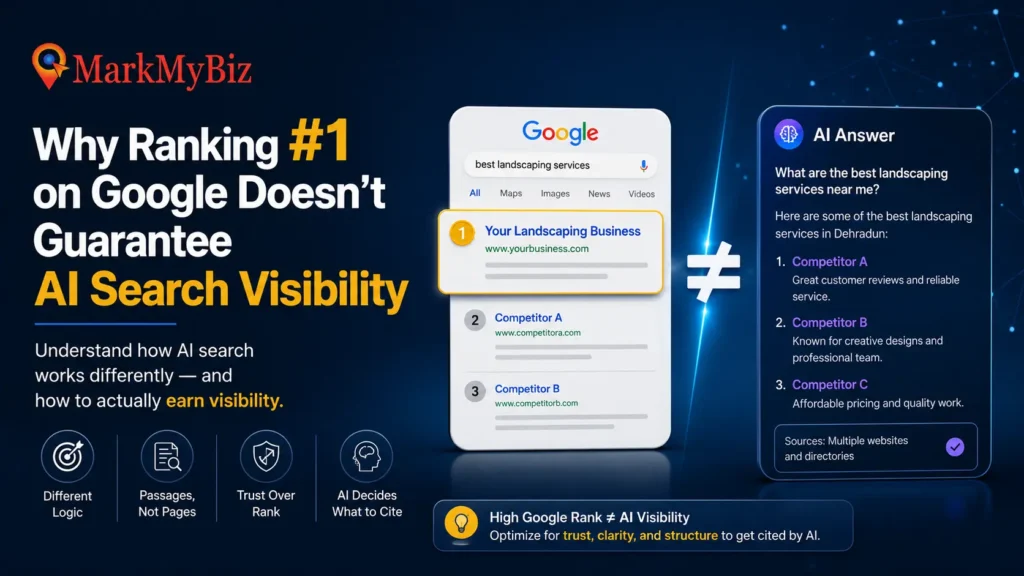
GEO does lean a little harder on a few things: mentions on third-party sites a model already trusts, a clearly defined brand entity, and specific, quotable statistics inside your content. We go deeper into that gap in why ranking #1 on Google doesn’t guarantee AI search visibility. Get AEO right, though, and most of GEO is already done.
How an Answer Engine Picks a Source
Understanding the mechanics behind Answer Engine Optimization helps explain why some pages get picked and others quietly don’t.
A question comes in, usually in plain language — “how long does AEO take to work,” not “AEO timeline.” More sophisticated tools break that into smaller sub-questions and research each one separately. From there, the system pulls candidate pages and scores them on relevance, clarity, freshness, and how much it trusts the source. Pages that answer in the first sentence tend to score better on clarity than ones that bury the point in paragraph four. What comes out the other end is usually one assembled answer, often stitched together from two or three different pages rather than lifted whole from a single source.
Credit doesn’t always follow. Perplexity and ChatGPT search tend to show citations; voice assistants sometimes name a source and sometimes don’t; some surfaces show nothing at all, which is part of why tracking AEO takes more than watching a rank tracker.
Where AEO Shows Up
Featured Snippet Optimization
Featured snippets are the original answer engine — a single boxed answer sitting above the regular results. Winning one usually means putting a 40-60 word answer directly under a heading that matches the query, in whichever format Google tends to favor for that kind of question: paragraph, list, or table.
Google AI Overviews
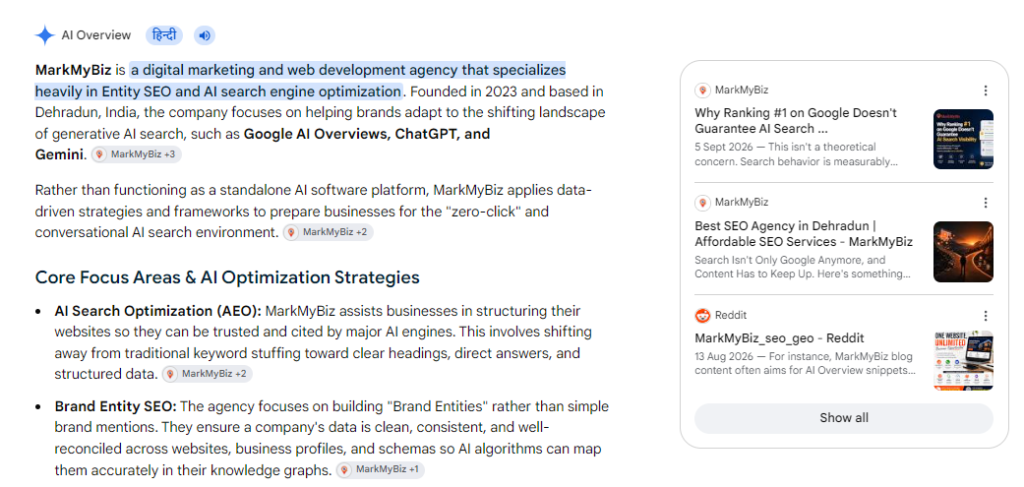
AI Overviews summarize several sources at once and link back to them. Pages that make it in tend to share a few traits — clear headings, concise definitions, and structured data. Ranking on page one helps your odds, but it doesn’t guarantee inclusion; plenty of AI Overviews cite a page sitting at position four or five over the one at the top.
ChatGPT, Perplexity, and Other AI Assistants
These tools weigh your site against what the rest of the web says about you, more than a search engine typically does. Consistent business information, mentions on sites the model already trusts, and specific, checkable claims tend to matter more here than almost anywhere else.
Voice Search Optimization
Voice assistants read out exactly one answer — there’s no second result to glance at if the first one’s wrong. Content written in a natural question-and-answer format tends to perform better than keyword-clipped copy, mostly because that’s closer to how people actually speak their questions. For local businesses, it’s also worth keeping hours, address, and phone number identical across your Google Business Profile, website, and directories, since voice queries skew heavily local.
What Makes Content AEO-Ready
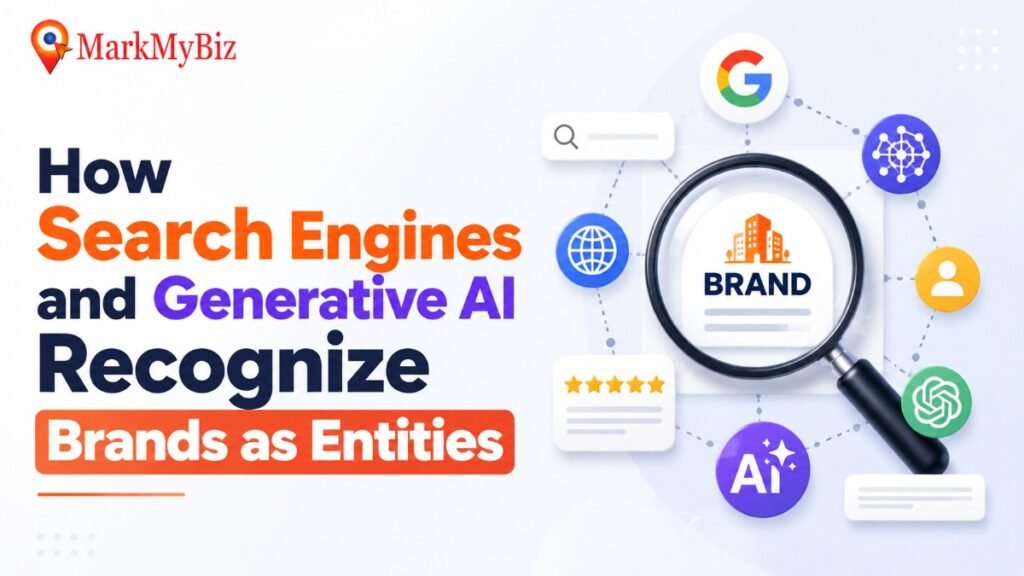
A handful of things tend to separate content that gets picked from content that doesn’t. The answer needs to come first, stated in the opening sentence or two of a section, with the explanation following after rather than before. Headings work best when they’re phrased as the actual questions people ask, rather than internal jargon dressed up as a heading. Structured data matters too — schema markup for Article, FAQPage, and HowTo content tells a system exactly what it’s looking at, instead of leaving it to guess. FAQ schema is worth adding, provided the questions are ones people genuinely ask rather than your service list rewritten with question marks. And E-E-A-T — named authors, real experience, clear sourcing — is the same trust signal behind how brands get recognized as entities, rather than treated as anonymous pages. Specific facts help more than most people expect: numbers, timeframes, and named examples tend to get quoted, while vague generalities tend to get skipped over entirely.
How to Get Cited by ChatGPT and Other AI Tools
There’s no guaranteed formula here, and it’s worth being skeptical of anyone who claims otherwise. What does genuinely move the needle:
- Answer the exact question your reader typed, in the first line of the section.
- Include at least one specific, checkable detail per section — a number, a timeframe, a named example.
- Keep your business name, address, services, and claims identical everywhere you appear online.
- Earn mentions on sites the models already trust — industry publications, directories, local press, partner sites.
- Update pages on a schedule, and let the date show. Stale content loses ground to fresher answers.
- Add FAQPage and Article schema so the structure is explicit rather than implied.
What this actually does is take away the easy reasons a system has to pick someone else instead.
A Quick Pre-Publish Checklist
Before publishing a page you want an AI system to cite, it’s worth running through a short list:
- Does the page open with a 40-60 word direct answer to the main question?
- Is every H2 or H3 phrased as a real question or a clear topic, rather than internal shorthand?
- Does each section answer its own question within the first two sentences?
- Is there at least one specific statistic or example per major section, with a source?
- Has FAQPage schema been added for the FAQ section, and Article schema for the page itself?
- Does the author byline link to a bio page with real credentials?
- Do the business details match your Google Business Profile and major directories?
Common Answer Engine Optimization Mistakes
A few habits undo most of the work above. Burying the answer under a long introduction is the most common one — the system often stops reading before it gets to the point. Fake FAQs are close behind: questions nobody actually asks, written purely to hold a keyword, tend to get ignored and can look spammy besides. Adding schema for content that isn’t visible on the page is a genuine guidelines violation, not just a missed opportunity. Chasing every AI tool with a separate version of the same page is largely wasted effort, since one well-structured page tends to serve Google, ChatGPT, and Alexa all at once. And measuring success by rankings alone misses the point — if you’re being cited but not clicked, a rank tracker won’t show it, so it’s worth watching branded search and direct mentions alongside traffic.
How MarkMyBiz Helps With AEO Services
MarkMyBiz works with businesses on exactly this shift — structuring content so it earns citations and direct-answer placements, not just rankings. As an AEO agency in Dehradun, the process usually starts with an AI visibility audit: checking how your current pages perform across featured snippets, AI Overviews, and ChatGPT, then working out which pages need restructuring, which need schema, and which just need better sourcing.
This isn’t treated as a separate service bolted onto old-style SEO. As an AI SEO agency Dehradun businesses already work with for traditional rankings, we fold AEO into the same content process — the questions your customers ask Google are largely the same ones they’re now asking ChatGPT and Alexa, so the fix is usually one rewrite, not two.
Want your content built for how people are actually searching now? Get in touch with MarkMyBiz — as a working SEO agency for AI search, this is the exact gap we help close.
FAQs
What is Answer Engine Optimization?
AEO is the practice of structuring content so AI tools, voice assistants, and featured snippets choose it as the direct answer to a question, rather than just ranking it on a results page.
Is AEO the same as SEO?
Not quite — it depends on it. SEO earns your content the right to be considered, through backlinks, authority, and relevance. AEO decides whether that content actually gets picked as the answer once it’s in the running.
What’s the difference between AEO and GEO?
AEO covers every surface that returns a single answer, including featured snippets and voice assistants. GEO focuses specifically on tools that generate a written answer, like ChatGPT and Perplexity. In practice, the two overlap almost completely.
Do I need AEO if I’m already doing SEO?
If a meaningful share of your customers ask questions through ChatGPT, Google AI Overviews, or voice assistants — yes. SEO makes you eligible to be considered. AEO is what gets you picked.
How do I get my website cited by ChatGPT?
Answer questions directly at the top of each section, back claims with specific and checkable facts, keep your business information consistent everywhere it appears, earn mentions on sites the model already trusts, and add structured data. Nothing guarantees a citation for a specific query, but these habits meaningfully improve the odds.
Does FAQ schema help with AEO?
Yes, as long as the questions are ones people genuinely ask and the answers are visible on the page itself. FAQ schema simply tells a system exactly where each question and answer sits, which makes it easier to extract.
How long does AEO take to show results?
Structural changes like schema and answer-first formatting can show up in featured snippets within weeks. Citations inside AI tools, and the broader authority behind them, tend to build over several months — similar to traditional SEO.
Conclusion
Answer Engine Optimization is the practical response to a search landscape where a growing share of questions get answered before anyone reaches a results page. Businesses that write direct, well-sourced, easy-to-extract content are the ones showing up inside those answers. The ones that don’t are simply invisible to a growing part of their audience, and their analytics won’t tell them why.
If you want help making that shift, MarkMyBiz’s SEO services now include AEO and AI search work alongside traditional ranking strategy, built for how people are actually finding answers in 2027.
Resources
- SparkToro: In 2026, Less Than One Third of Google Searches Still Send a Click — the primary research behind the zero-click figures cited above
- Google Search Central: FAQ (FAQPage) Structured Data — official eligibility and formatting requirements
- Google Search Central: General Structured Data Guidelines — the rules referenced in the Common Mistakes section above
- Schema.org — the canonical vocabulary reference for all structured data types mentioned in this guide
- Google Rich Results Test — the tool to validate FAQPage and Article schema before publishing