Most SEO conversations in 2027 start the same way: someone asks what’s new, and the answer is usually about AI Overviews, generative search, or some algorithm shift nobody can fully verify. Fair enough — those things matter. But there’s a quieter tactic sitting underneath all of it that keeps outperforming expectations, and almost nobody talks about it because it isn’t exciting.
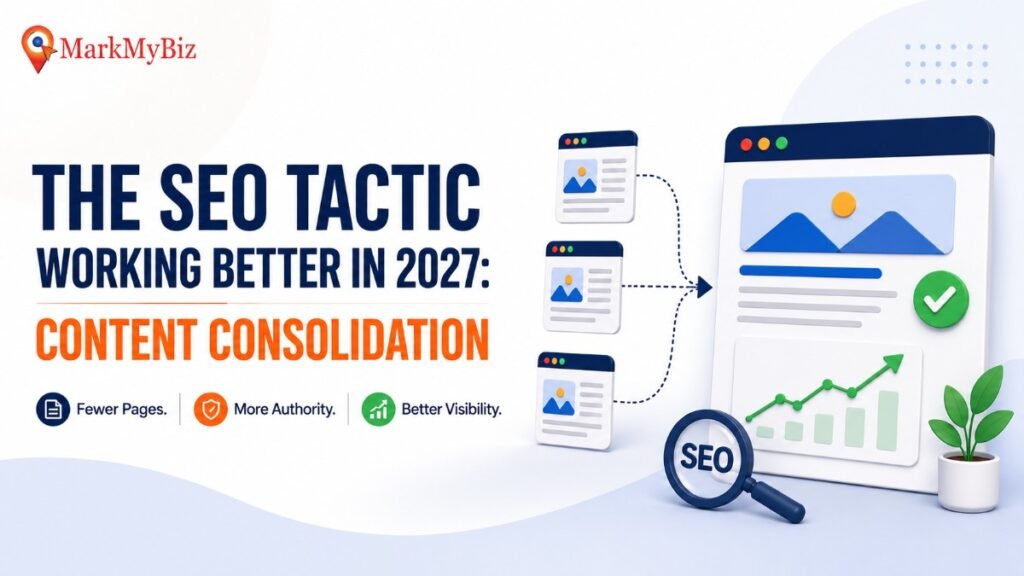
It’s content consolidation — deliberately merging, rewriting, and strengthening a smaller number of pages instead of constantly adding new ones. No new tool, no secret algorithm hack, just fewer, better, more connected pages built around the topics your business actually knows something about.
The reason this works better than most people expect is counterintuitive. Businesses have spent years being told that “more content equals more rankings.” So they publish and publish, until they end up with a blog full of thin, overlapping articles that compete with each other, confuse readers and search engines about which page is actually the answer, and dilute whatever authority the site was building. Consolidation reverses that. It’s less about writing more and more about proving you deserve to be trusted on a topic — which is exactly what modern search, including AI-powered search, is trying to figure out.
The SEO Tactic More Businesses Should Be Paying Attention To
Content consolidation means taking multiple overlapping or underperforming pages and combining them into one genuinely comprehensive resource, then retiring or redirecting what’s left over. In practice, it looks like merging three thin blog posts on “local SEO tips,” “SEO for small business,” and “how to rank on Google” into one deeply useful guide, with the weaker pages 301-redirected into it.
It’s overlooked for a predictable reason: it doesn’t feel productive. Deleting or merging pages feels like giving something up, while publishing a new article feels like progress, even when that new article barely moves the needle. Most content calendars are built around output — how many posts went live this month — not whether existing coverage of a topic is actually strong enough to compete. It also requires looking honestly at your own content’s weaknesses, which is less comfortable than brainstorming new topics. But that audit is usually where the real opportunity is sitting.
Why This Strategy Matters More in 2027
A few real shifts explain why consolidation pays off more now than it did five years ago.
Search behavior has changed. People increasingly ask a single, more complete question instead of running several narrow searches, and expect one thorough answer rather than piecing it together from five pages. A site with three shallow articles on a topic competes against itself for that one query — keyword cannibalization — while failing to satisfy anyone looking for real depth.
AI-powered search has raised the bar on depth and clarity too. Systems generating AI answers tend to favor sources that cover a subject thoroughly, rather than sources split across thin, half-finished pages. That’s a reasonable, observable pattern, though no search engine has published an exact formula for how it selects sources for AI-generated summaries, so treat it as an informed inference, not a guaranteed mechanism.
Competition has gotten more crowded too. AI writing tools made it trivial to produce volume fast, so more sites than ever are publishing more pages than ever, many of them thin or barely differentiated. In that environment, fewer, stronger, more original pages tend to stand out more than trying to out-publish everyone else.
How Topical Authority Supports the Strategy
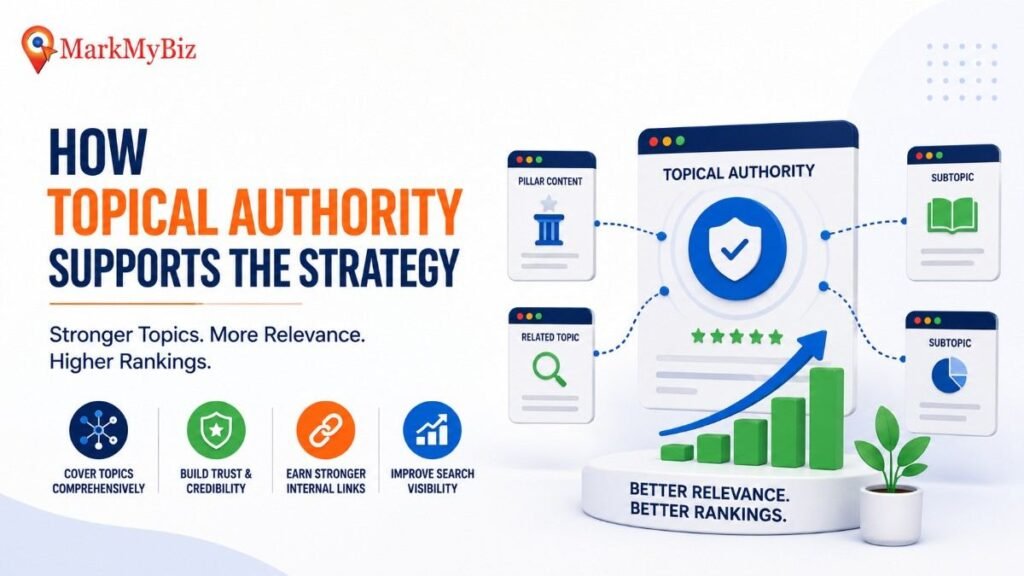
Topical authority is the idea that a website earns credibility on a subject by covering it thoroughly and coherently, not by scattering keyword-targeted pages across unrelated angles. Search systems have gotten better at recognizing when a group of pages genuinely works together to explain a topic, versus when a site has just bolted on loosely related posts.
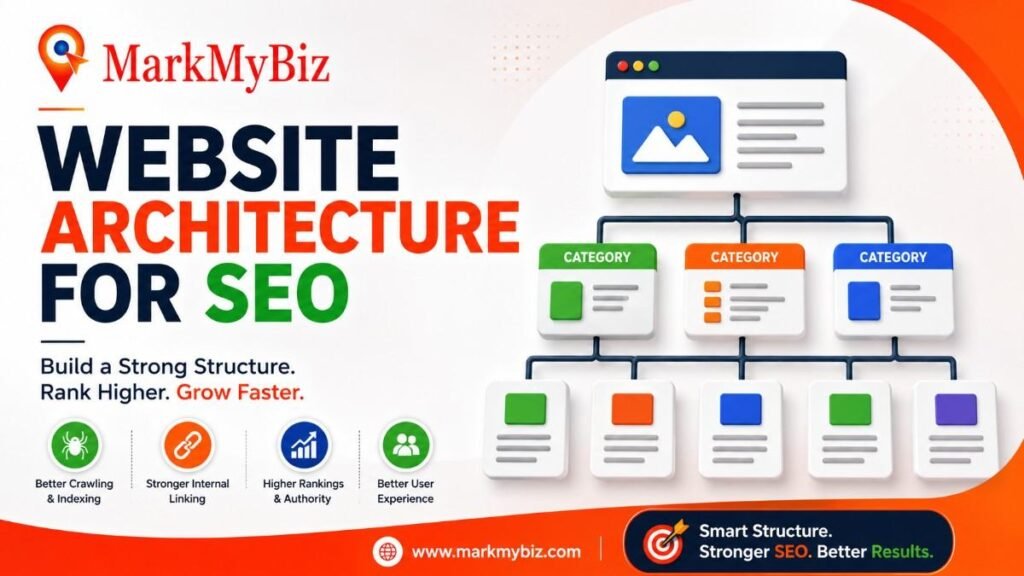
Consolidation is one of the fastest ways to build that kind of authority, because it turns scattered, competing content into a coherent structure: one strong core page, supported by a handful of genuinely distinct related articles that link back to it and to each other.
A practical example: a local law firm might have separate old posts titled “What to do after a car accident,” “Do I need a lawyer after a fender bender,” and “Steps after a minor collision.” Each is thin, and all three fight for the same searches. Merged into one authoritative guide on handling a car accident claim, with supporting pages on medical documentation or dealing with insurance adjusters, the site has a real topic cluster instead of three weak entries competing with each other.
Search Intent Matters More Than Simply Adding Keywords
Ranking for a keyword doesn’t mean much if the page doesn’t match what the searcher actually wants. The same keyword carries different intent depending on phrasing. “What is local SEO” wants an explanation — informational intent. “Local SEO services near me” wants to evaluate providers — commercial intent. “Book SEO consultation” is ready to act — transactional intent. A company name plus “SEO” is someone trying to find that specific business — navigational intent.
A common mistake during consolidation is merging pages that serve different intents into one confused page that fails all of them. If one post explains what SEO is and another compares providers, don’t force them together — consolidate what’s genuinely redundant, but keep intent-distinct pages separate and linked, so a reader moving from curiosity to comparison to decision has a clear path.
Where Entity-Based SEO Fits In
Modern search systems don’t just match keywords anymore — they try to understand entities: businesses, people, products, services, locations, and how those things relate. A clinic, its lead practitioner, its specific treatments, and the neighborhoods it serves are all entities search engines try to connect and verify.
This matters for consolidation because scattered content makes those relationships harder to read. Five pages vaguely describing “our services” with inconsistent details make it harder for search systems and readers to build a clear picture of what you do. One well-structured services page and consistent business details across the site help establish that clarity. It’s less about technical markup and more about being unambiguous — the same name, location, and service descriptions, everywhere they appear.
How AI Search and Google AI Overviews Change the Equation
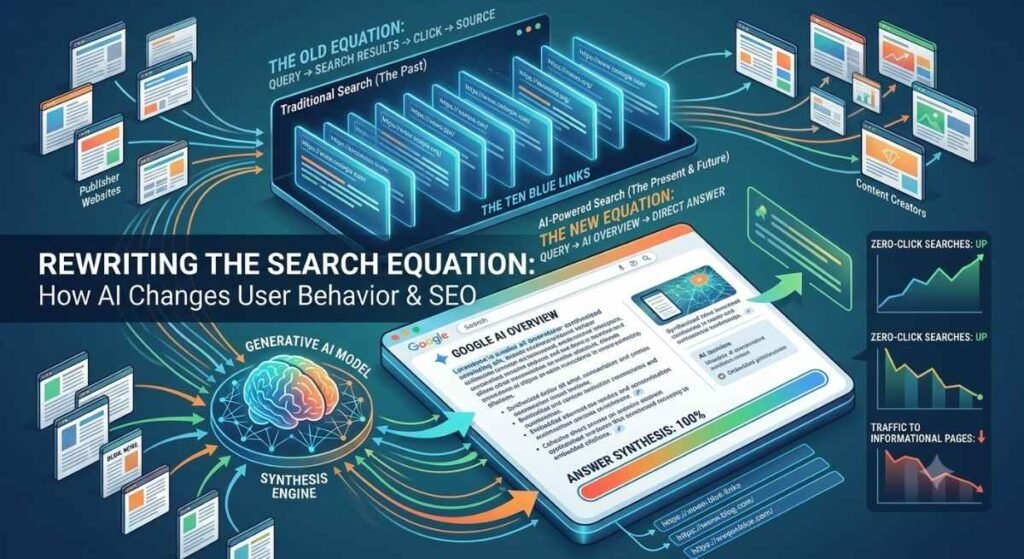
AI Overviews and similar generative search summaries pull from a relatively small set of sources to construct an answer. Google has been public about wanting to reward original, people-first content and has said helpfulness and page experience matter to its ranking systems — that much is documented, not speculation. What isn’t public is the exact mechanism by which a specific page gets pulled into a specific AI-generated summary. So it’s a reasonable inference, not a confirmed rule, that consolidated, comprehensive pages are easier for these systems to lift a clean answer from than a handful of thin, fragmented ones.
None of this guarantees inclusion in an AI Overview, a citation from an AI assistant, or a ranking boost — anyone promising that outcome is overselling. What consolidation reliably does is make your best content easier to find, trust, and point search systems toward, which is a solid foundation regardless of how any single AI feature evolves.
Biggest SEO Threats in 2027
A few realistic risks explain why so many sites need consolidation in the first place: mass-produced, low-effort content that underperforms once search systems catch up to it; keyword cannibalization, where multiple pages competing for the same query split ranking signals instead of concentrating them; outdated information sitting live and quietly damaging trust; search-intent mismatch, where a page mentions the right keyword but doesn’t answer what the searcher wanted; weak internal linking that leaves good content isolated; and generic, undifferentiated content that could belong to any business in any city. Each of these is common and fixable, and usually surfaces during exactly the kind of audit that precedes a consolidation project.
How Businesses Can Implement This SEO Strategy
There’s no shortcut formula that guarantees rankings, but here’s a grounded process:
- Identify your core business topics — the subjects your business genuinely has expertise in.
- Audit existing content using analytics data — organic traffic, engagement, and rankings per page.
- Group overlapping or competing pages targeting similar queries.
- Decide refresh, consolidate, or remove for each group.
- Write the consolidated page properly, combining the strongest ideas rather than stitching pages together.
- 301-redirect retired URLs so existing links and rankings carry over instead of being lost.
- Rebuild internal links to related content and relevant service pages.
- Keep entity details — business name, location, services — consistent across whatever remains.
- Monitor performance for several months, since results tend to show up gradually.
- Repeat periodically, as a standing part of content strategy rather than a one-time cleanup.
This isn’t a guaranteed ranking formula — it’s a structured way of making sure your best content gets the visibility it deserves instead of competing with its own weaker pages.
How to Measure Organic Search Visibility
Rankings alone are a thin way to judge whether this is working. Better signals to track: organic traffic to the consolidated page versus the combined traffic of the pages it replaced; search impressions and click-through rate in Search Console; keyword visibility across a broader set of related queries, not just one target phrase; non-branded search growth; engagement metrics like time on page; conversions and assisted conversions, since visibility without business results isn’t the real goal; and visibility in AI-generated answers where it’s measurable, treated as a directional signal rather than a precise metric, since tracking AI citations is still an evolving practice industry-wide.
Give it real time. Because consolidation often means losing several old URLs, there can be a short dip before the merged page fully absorbs their authority and traffic.
When Professional SEO Services Make Sense
A lot of consolidation work is doable in-house — an honest content audit, a spreadsheet, and some editing time gets a small site most of the way there. Professional SEO services tend to earn their cost when content volume is large, when redirects carry real technical risk if done wrong, or when a business doesn’t have the internal time to run a proper audit alongside everything else it’s managing.
A professional SEO consultant can also bring outside perspective on which pages are actually strong versus which just feel important because you wrote them. That honest, slightly uncomfortable audit is often where an experienced SEO agency adds the most value — not by promising rankings, but by doing the diagnostic work most businesses don’t have the bandwidth or objectivity to do themselves.
Final Takeaway
Chasing every new SEO trend is exhausting and rarely pays off, because most trends are variations on one idea: search systems, human or AI, want clear, trustworthy, genuinely useful answers. Content consolidation works in 2027 not because it’s clever, but because it directly strengthens what has mattered for over a decade — proving your website deserves to be the answer.
If there’s one practical move to make after reading this, it’s to spend a week auditing what you’ve already published before writing anything new. You’ll likely find pages worth merging, updating, or retiring — and fixing those is often more valuable than anything new you could add.
Sources & Resources
- Google Search Central — Creating Helpful, Reliable, People-First Content
Covers helpful content, originality, expertise, E-E-A-T, content quality, and avoiding search-engine-first content.
Read Google Search Central: Creating Helpful, Reliable, People-First Content - Google Search Central — AI Features and Your Website
Useful for the article’s discussion of Google AI Overviews, AI Mode, and how foundational SEO practices apply to Google’s AI search features.
Read Google Search Central: AI Features and Your Website - Google Search Central — Google’s Guide to Optimizing for Generative AI Features
Supports the sections on AI search optimization, unique content, people-first content, technical SEO, and avoiding unnecessary AI/SEO “hacks.”
Read Google’s Generative AI Search Optimization Guide - Google Search Central — SEO Starter Guide
Useful for supporting claims about content quality, search intent, links, anchor text, content organization, and fundamental SEO.
Read the Google SEO Starter Guide - Google Search Central — Link Best Practices
Supports your discussion of internal linking, contextual links, crawlability, and descriptive anchor text.
Read Google Link Best Practices - Google Search Essentials
Useful for supporting the article’s broader discussion of helpful content, search visibility, technical requirements, and spam policies.
Read Google Search Essentials