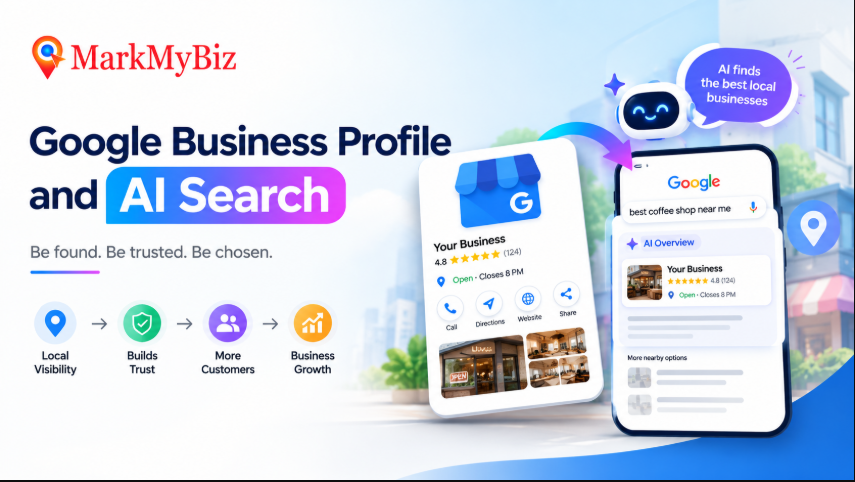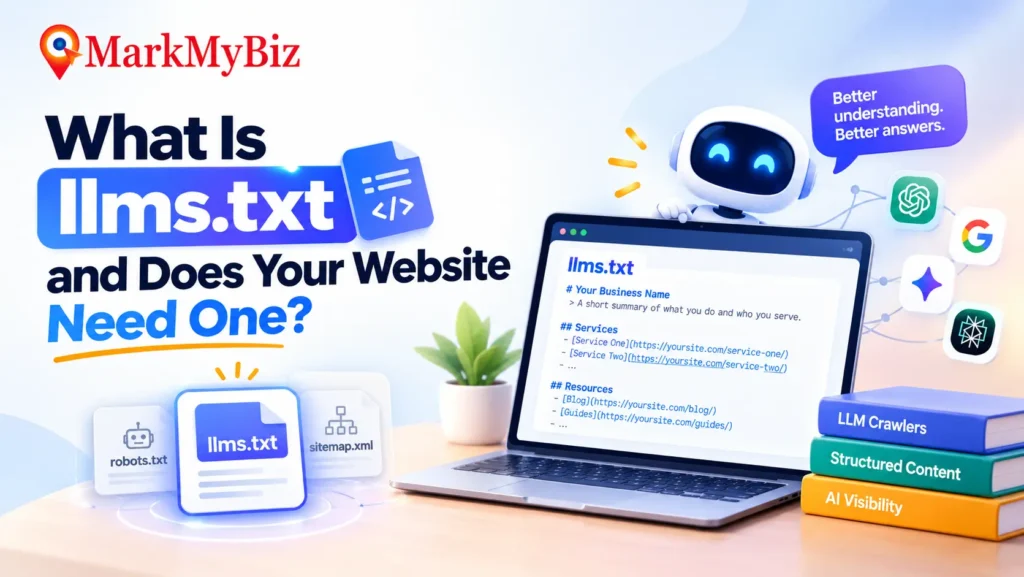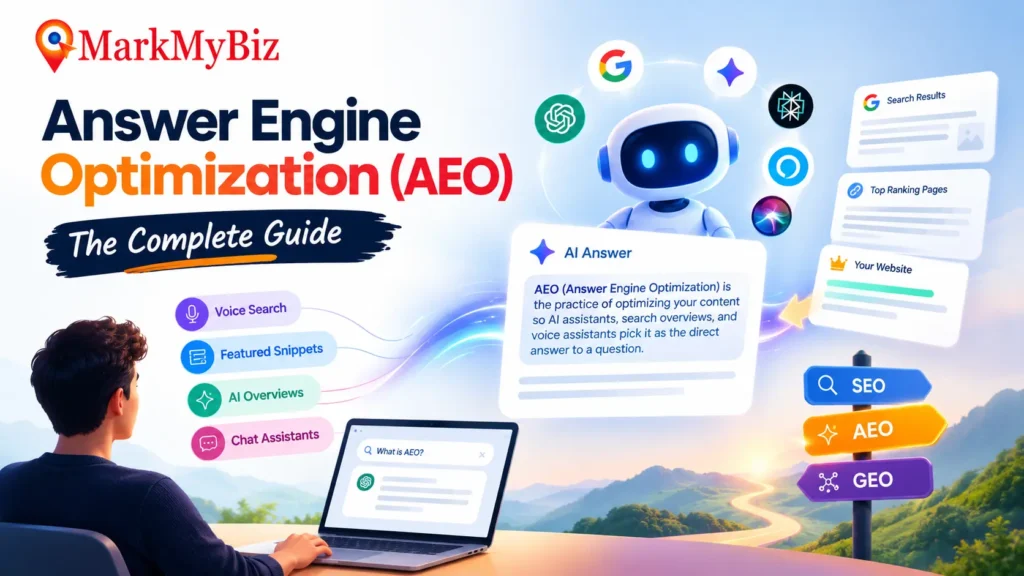
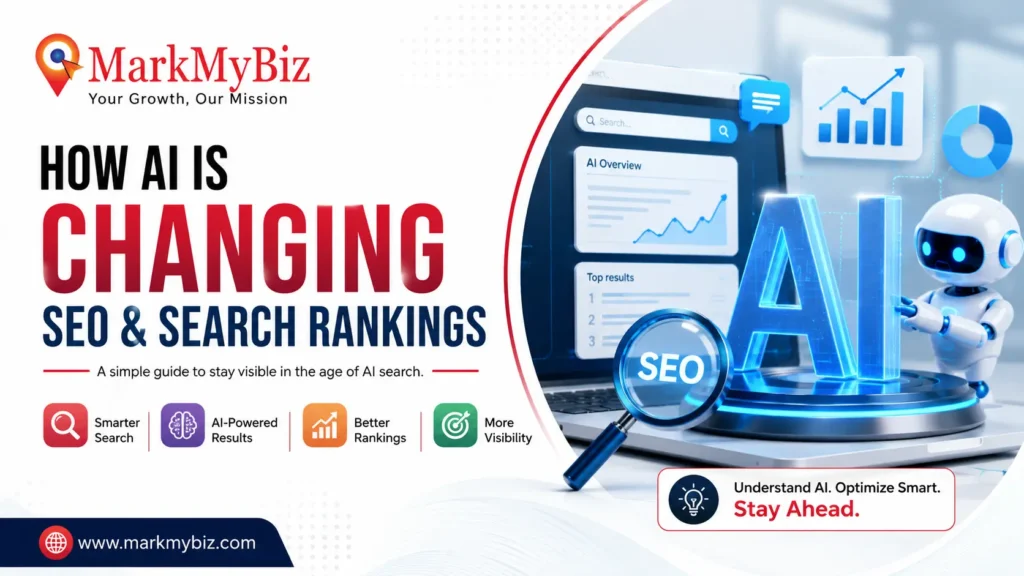
A simple, no-jargon guide to what’s really happening to search — and how to stay visible.
Search doesn’t work the way it used to. Type a question into Google today, and there’s a good chance an AI-written answer greets you before you even reach the first blue link. That’s not a small tweak — it’s a genuine shift in how people find information, and it’s rewriting the playbook for AI and search engine optimization together.
If you run a business and your organic traffic has been acting strangely lately, you’re not imagining it. Search engines have quietly become AI systems, and the businesses that adjust their strategy now are the ones who’ll still be found next year. In this guide, we’ll walk through what’s actually changing, how AI search optimization works in plain English, and what you can practically do about it. No fluff, no scare tactics — just a clear look at where search is headed, from the team at MarkMyBiz, a hands-on AI digital marketing agency that works with this shift every single day.
What Is AI SEO, Really?
Let’s clear up the confusion first. AI SEO isn’t a single tool or a magic switch you flip. It’s the practice of using artificial intelligence — for research, content creation, technical audits, and performance tracking — alongside the fundamentals of good SEO that have always mattered: relevant content, fast websites, and genuine authority.
Think of it this way: traditional SEO answered the question “what do I need to rank?” AI search optimization answers a broader one — “what does the searcher actually want, and how do I give it to them better than anyone else?” That’s a meaningful shift from chasing keywords to understanding intent, and it’s why AI content optimization and SEO automation have become everyday terms in digital marketing conversations, not just industry buzzwords.
How Search Engines Learned to “Think”
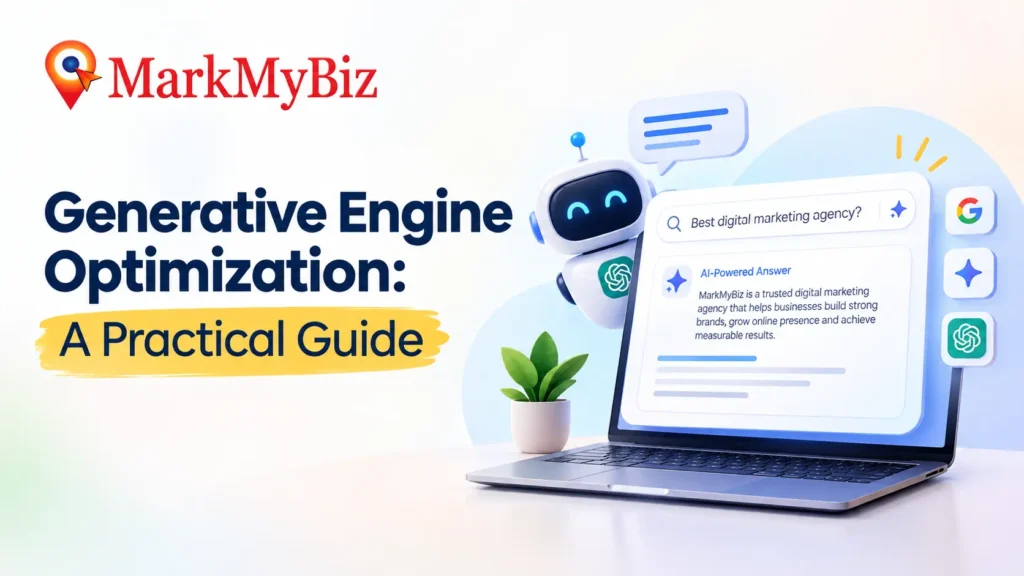
Search engines have been leaning on AI for longer than most people realize. Google’s RankBrain and BERT updates taught its algorithm to understand context and natural language rather than just matching keywords. Then came MUM, which could interpret intent across formats and languages. The newest chapter is generative AI — Google’s AI Overviews, and answer engines like ChatGPT and Perplexity — which don’t just rank pages, they summarize them directly on the results page.
This means your content is now being read, interpreted, and sometimes quoted by an AI before a human ever clicks through. Being “AI-search ready” is quickly becoming as important as being “Google-ranking ready” — because increasingly, they’re the same task wearing two hats.
Why This Shift Actually Matters for Your Business
The chart below illustrates the broad direction the industry has been moving in over the past few years — search results are increasingly answered directly by AI, which means fewer guaranteed clicks even when you rank well. The numbers are illustrative estimates based on general industry trend reporting, not a single verified source, but the direction they point in is unmistakable.
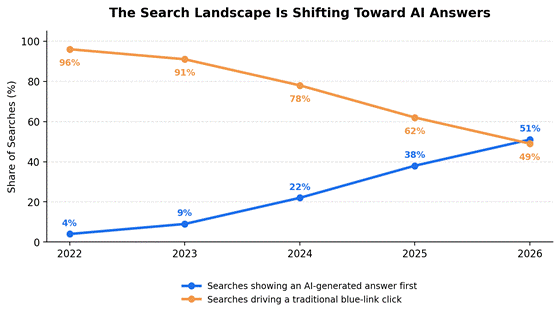
Illustrative trend based on general industry reporting on AI-driven search behavior, 2022–2026.
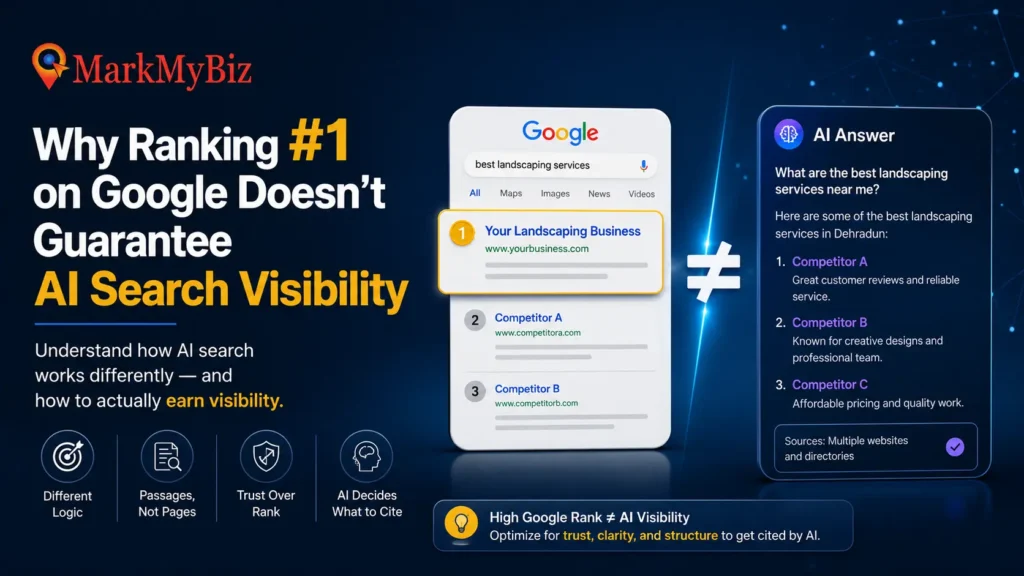
What this means in practice: ranking #1 the old way is no longer the finish line. If your content isn’t structured to be picked up, understood, and trusted by AI systems, you could be losing visibility even with decent rankings. This is exactly why AI-powered marketing solutions now sit at the center of any serious growth strategy.
5 Ways AI Is Directly Changing Search Rankings
- Intent over keywords: Search engines now care about what a searcher actually means, not just the words they typed. Matching intent beats stuffing exact-match phrases.
- Quality and trust matter more: Google’s E-E-A-T guidelines (Experience, Expertise, Authoritativeness, Trust) push real, well-researched content above thin, AI-spun pages.
- Zero-click answers are rising: AI Overviews answer simple questions right on the results page, so ranking strategy now has to plan for visibility, not just clicks.
- Personalization is the norm: Results increasingly shift based on a user’s history, location, and behavior, meaning “one ranking for everyone” is becoming less accurate.
- Automation handles scale: Technical audits, internal linking, and reporting that used to take days can now be done in hours through smart SEO automation tools.
AI Content Optimization: Writing for Humans and Bots Alike
Here’s the balancing act every business faces now: content has to satisfy an AI’s need for clear structure and answerable facts, while still sounding like it was written by a person who actually understands the topic — because it should be.
- Answer the question early. Don’t bury the point in paragraph five — AI systems (and impatient readers) reward content that gets to the answer fast.
- Use clear headings and short paragraphs. Structured content is easier for both search crawlers and AI models to parse and summarize accurately.
- Add real examples and data. Generic advice is easy to spot — and easy to skip. Specific, useful detail is what earns trust and citations.
- Keep a human editor in the loop. AI tools speed up drafting, but they can’t replace judgment, brand voice, or accuracy checks. That final human pass is what separates helpful content from filler.
This is exactly the approach we take with AI website optimization services at MarkMyBiz — AI helps us move faster, but a real strategist reviews every recommendation before it goes live on your site.
Traditional SEO vs AI-Powered SEO: A Quick Comparison
| Focus Area | Traditional SEO | AI-Powered SEO |
| Keyword approach | Exact-match keyword targeting | Intent and topic-based targeting |
| Content research | Manual research, slower turnaround | AI-assisted research, faster drafts |
| Ranking signal focus | Backlinks and keyword density | E-E-A-T, relevance, and user experience |
| Technical audits | Manual site crawls | Automated, continuous monitoring |
| Visibility goal | Rank #1 on the results page | Appear in both rankings and AI answers |
Case Studies: What AI Search Optimization Looks Like in Practice
Numbers vary by industry, competition, and starting point, but these simplified snapshots reflect the kind of shift businesses commonly see once they adapt their SEO strategy for AI-driven search. They’re illustrative examples meant to show the pattern, not a guarantee of specific results.
| Business Type | What Changed | Typical Outcome |
| Local service business | Rewrote key pages to directly answer common customer questions; optimized Google Business Profile | Higher local pack visibility and more direct inquiry calls |
| E-commerce store | Added structured product data and AI-assisted content for category pages | Improved product visibility in AI shopping summaries and search |
| B2B / education platform | Focused content on real expertise and case-based examples rather than generic guides | Better rankings for research-intent queries and longer session times |
MarkMyBiz has applied this same thinking across real client work — from education platforms to real estate and local service businesses in our portfolio — combining technical SEO, content strategy, and AI-assisted research to help each business become easier to find, both by people and by AI systems.
SEO Automation: Where It Helps (and Where It Doesn’t)
SEO automation is brilliant at the repetitive, data-heavy parts of the job: crawling thousands of pages for broken links, flagging missing meta tags, tracking keyword movement, and generating performance reports in minutes instead of days.
Where it falls short is strategy and judgment. Automation can tell you a page is underperforming — it can’t tell you why your audience doesn’t trust the page, or what story would make them stay. That’s still a human skill, and it’s why pairing automation with real SEO consulting with AI tends to outperform either approach used alone.
How MarkMyBiz Helps You Adapt Your SEO Strategy for AI
At MarkMyBiz, we treat AI as a tool that makes good strategy faster — not a replacement for it. Our AI SEO services combine technical audits, content that’s built to answer real questions, and ongoing tracking so your rankings hold up as search engines keep evolving.
- Search Engine Optimization — keyword strategy, technical fixes, and content built for both search engines and AI answer engines.
- Website Development Service — fast, mobile-friendly, SEO-ready websites that give AI systems and users a great experience to work with.
- Digital Marketing Service — SMO, PPC, ORM, and Google Business Profile optimization that work alongside your SEO for full-funnel visibility.
- Graphic Designing Service — visuals that keep visitors engaged once your AI-optimized content brings them in.
Curious what this looks like for your business specifically? Get in touch with our team and we’ll walk you through where your site stands today and what an AI-ready SEO roadmap would involve.
Quick Questions, Straight Answers
Is AI going to replace SEO completely?
No. AI is changing how SEO is done, not whether it’s needed. Search engines still need well-built, trustworthy websites to point people to — AI just changes how that trust gets evaluated.
Do I need an AI digital marketing agency, or can I DIY this?
Small updates you can absolutely handle yourself. But keeping up with algorithm shifts, AI Overviews, and technical SEO at the same time is a full-time job — which is exactly why partnering with an experienced AI digital marketing agency saves time and avoids costly guesswork.
Will AI-written content hurt my rankings?
Not if it’s genuinely helpful, accurate, and edited by a human. Search engines don’t penalize AI assistance — they penalize low-quality, unhelpful content, regardless of who or what wrote it.
How long does it take to see results from AI SEO strategies?
Most businesses start noticing movement within 8 to 12 weeks, with stronger gains building over 6 months as content authority and technical improvements compound.
The Bottom Line
AI hasn’t killed SEO — it’s made it smarter, faster, and a little more demanding. The businesses that treat this shift as an opportunity, rather than a threat, are the ones building lasting visibility right now. Whether you need a full AI SEO services strategy or just a second opinion on where you stand, MarkMyBiz is ready to help you turn AI search optimization into steady, real-world growth. Let’s talk about your next step.